
2026-09-28
Guide: Which Reverse Vending Machine Should You Choose for the UK DRS?
With the UK Deposit Return Scheme (DRS) officially locked in for 1 October 2027, British supermarket bosses, independent grocers, and forecourt operators face a major operational milestone. Compliance is mandatory, but your choice of infrastructure determines whether automated recycling becomes a labour-draining burden or a highly profitable footfall driver.
Choosing the right system is a balancing act between three crucial factors: available shop-floor space, expected container return volume, and daily customer flow.
Rather than squeezing your storefront into a rigid, one-size-fits-all setup, retailers should evaluate the three primary categories of reverse vending technology to see which layout fits their specific business footprint.
1. Standalone systems: most flexible option for operators of all sizes
A standalone reverse vending machine is an all-in-one, self-contained unit. The container entry point, barcode scanners, compaction technology, and storage bins are completely enclosed within a single physical cabinet that can be sited indoors on your retail floor or outdoors on a forecourt or car park using weatherised RVM shelters.
- The Setup: Plug-and-play. They typically operate on single-phase power, require a compact footprint starting from as little as 0.41m², and do not require any structural walls or renovations.
- When to choose this type: It is the most flexible option across the market, making it viable for both small independent retailers and larger operators looking for versatile indoor or outdoor placement without major building work.
- Real-world examples: For small-to-medium footprints, manufacturers design these units to maximize internal capacity within a tight outer shell. For instance, RVM Systems offers the X-Series standalone line. Within this category, an independent retailer looking to secure the UK’s confirmed 5p Return Handling Fee (RHF) (and utilize the £6,000 site grant paid across three years) while collecting PET plastic and cans might look at a compact option like the RVM Systems X2. Meanwhile, a retailer in a region mandating glass collection (like Wales during its 4-year transition period) would utilize a multi-material standalone unit like the RVM Systems X3.
2. Modular systems: best for hiding logistics behind the wall
A modular system splits the machine’s architecture into two sections. The consumer only interacts with a sleek, flush-mounted user interface panel on the shop floor. The actual compaction machinery, conveyor belts, and large storage bins sit entirely behind that wall, hidden away in a backroom, stockroom, or inside an external housing enclosure.
- The setup: Tailored and expandable. The front panel cuts through a partition wall and connects to backend storage cabinets that can often be arranged or turned at 90-degree angles to fit your specific layout. Because modular systems can also be installed inside external housing enclosures, an adjacent internal stockroom is not strictly required.
- When to choose this type: If you run a mid-to-large supermarket and want to keep the noise, sticky residue, and daily bin-emptying operations completely invisible to your shopping aisles (protecting your core footfall and customer halo effect).
- Real-world examples: This layout is highly customizable. In the modular space, RVM Systems builds the ProLine Modular Series. If a medium supermarket has high traffic but narrow backroom area, a narrow-profile option like the ProLine Slim is a common configuration. If a busy supermarket chain needs to accommodate two customers returning items at the exact same time, the setup can be expanded into a ProLine Duo, which links two front-facing user panels to a shared backend line of up to eight Euro-pallet-sized storage cabinets.
3. Multi-feed systems: best for high-volume, bulk processing
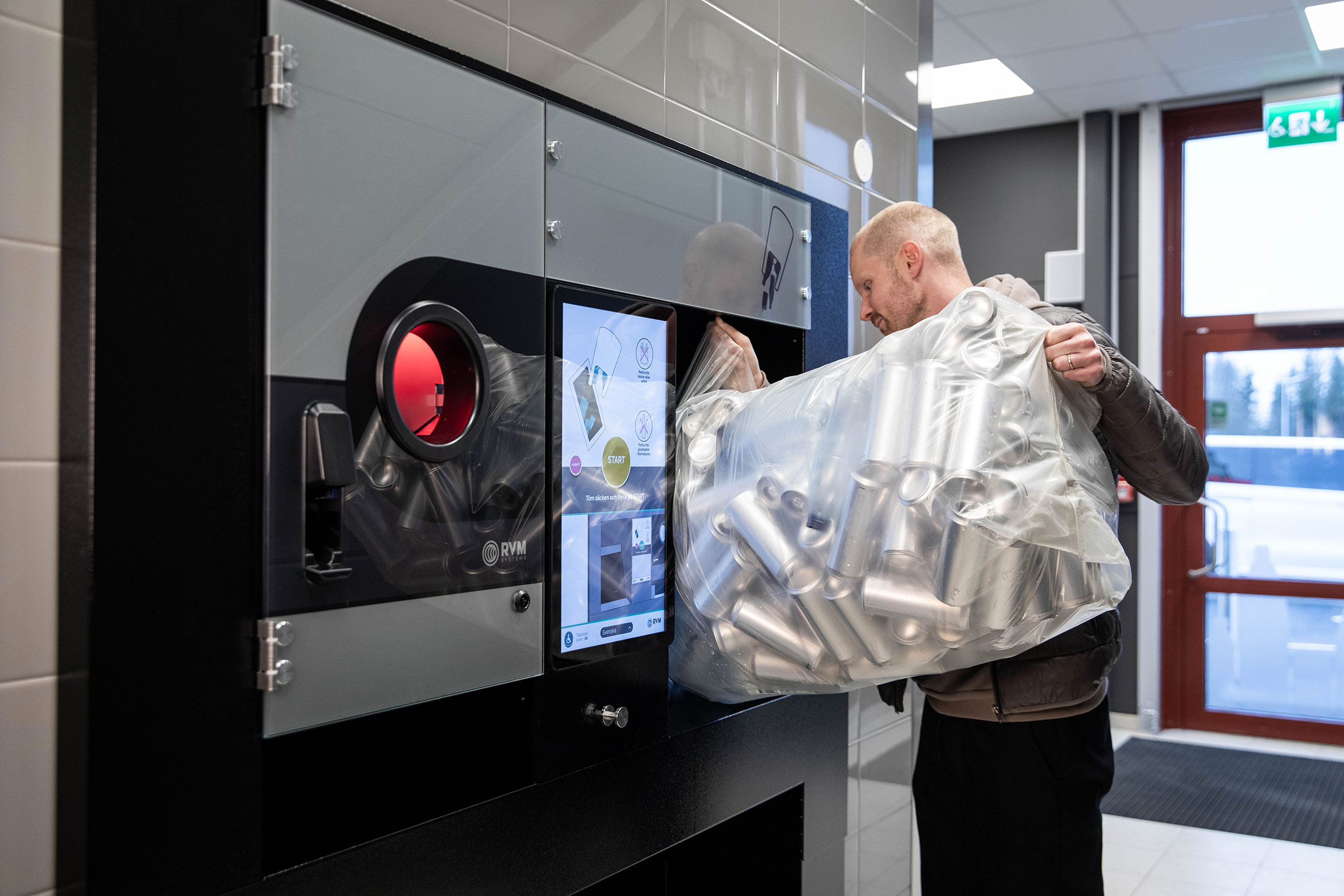
Multi-feed (or bulk-pour) systems represent the highest tier of customer convenience. Instead of forcing consumers to insert bottles and cans item-by-item, these machines feature a wide hopper where users can literally pour an entire bag of mixed recycling into the machine all at once.
- The setup: High-speed automation running on three-phase power, utilizing advanced sorting belts that rapidly separate, identify, and compact containers.
- When to choose this type: If you operate a high-volume superstore, a major retail park, or a dedicated redemption centre where long weekend lines at traditional single-feed machines would cause customer frustration and turn shoppers away.
- Real-world examples: The primary benefit of multi-feed technology is an unparalleled customer experience that drives significantly higher container return rates and creates a much greater footfall halo effect for your store. For example, the RVM Systems Mega ProLine+ series allows shoppers to pour full bags of PET plastic bottles and aluminium cans straight into the hopper for rapid processing at up to 100 containers per minute. To provide a seamless, all-in-one return station for all container types, high-volume stores often select the Mega ProLine+ Duo. This configuration pairs the high-speed bulk hopper (for PET bottles and cans) with an adjacent single-feed chute for glass bottles, allowing customers to easily return all materials in one quick visit at a combined speed of 160 containers per minute.
